Weekly Private Markets Wrap: Anduril’s $6.6 Billion Shipyard Bet Expands the Private Defense Boom
Welcome to the KraneShares Private Markets Weekly Wrap! This free newsletter identifies and analyzes the most important developments within the S&P® U.S. Private Stock Expanding Leaders Index and worldwide private markets every week. The newsletter focuses on companies, investors, and broader trends. We will also publish a weekly refresh of the S&P® U.S. Private Stock Expanding Leaders Index of the top 10 largest private companies in the United States.
Learn how to access these top private companies.
Index Updates
The S&P U.S. Private Stock Top 10 Index rose 2.6% this week ending October 9, climbing from 333.35 to 341.89. The index is now up 74.5% in 2026. Its largest daily increase came on October 7, one day after defense technology company Anduril announced a $6.6 billion shipyard project and the same day AI model developer Anthropic introduced Claude Haiku 5.5. Current implied valuations show the widest gains from the last funding rounds at brain computer interface company Neuralink, valued at $60 billion versus $9.65 billion in May 2025; Anduril, at $139 billion versus $60 billion in April 2026; and Anthropic, at $1.54 trillion versus $965 billion in May 2026. Humanoid robotics developer Figure AI remains the only company in the ten company snapshot valued below its last funding round.1
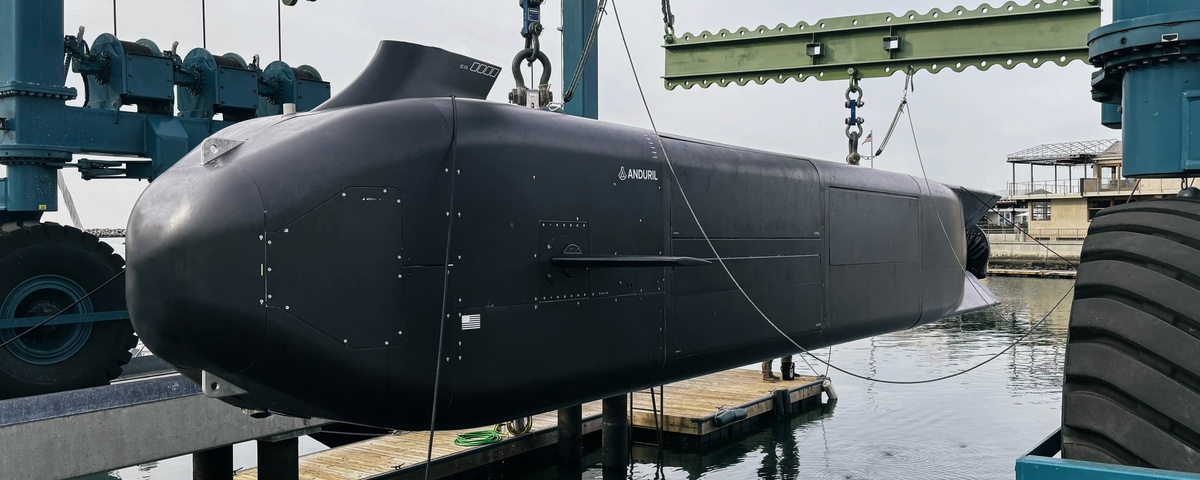
Anduril’s $6.6 billion shipyard project brings software into heavy industry
Defense technology company Anduril is moving beyond autonomous weapons and command software into one of the most complex areas of American manufacturing. The company and the U.S. Navy announced Arsenal 2, a new Maryland shipyard that will manufacture components and large assemblies for the US family of nuclear-powered fast attack and guided missile submarines AKA Virginia-class submarines.
The project combines a $3.7 billion private investment from Anduril with a Navy contract worth up to $2.9 billion. Payments under the contract are tied to production outcomes, placing much of the execution risk on Anduril rather than the government.
Arsenal 2 will occupy 187 acres at Sparrows Point in Baltimore County. The planned facility will contain more than 2 million square feet of production space and is expected to create 3,100 direct jobs and more than 11,000 indirect jobs. Initial operations are scheduled for 2030.
The scale matters because Anduril is applying its software focused manufacturing model to a sector known for long production cycles and limited capacity. The company plans to use ArsenalOS, its industrial software platform, to coordinate fabrication, assembly, testing, and production planning.
This strategy could make Anduril more important to the defense supply chain, but it also changes the company’s risk profile. A project of this size introduces construction, hiring, procurement, regulatory, and production risks that are different from those associated with developing software or smaller autonomous systems.
Anduril’s current implied valuation is approximately $139 billion, 132% above its $60 billion April financing valuation. That comparison shows how strongly private market price discovery has responded to the company’s growing contract base and manufacturing ambitions.2
Private markets project snapshot
Anduril’s Arsenal 2 project
| Project element | Amount or timing |
|---|---|
| Total announced project value | $6.6 billion |
| Anduril private investment | $3.7 billion |
| U.S. Navy contract | Up to $2.9 billion |
| Project site | 187 acres |
| Planned production space | More than 2 million square feet |
| Direct jobs | 3,100 |
| Expected initial operations | 2030 |
OpenAI’s revenue revision shows why comparable financial reporting matters.
Generative AI developer OpenAI told investors that its annualized September revenue was nearly $50 billion, according to Reuters. That figure was about $20 billion below an earlier indication that the company’s revenue run rate was approaching $70 billion.
The difference appears to reflect accounting and comparability choices rather than a sudden contraction in demand. Reuters reported that OpenAI excludes sales made through cloud partners from its measure, while Anthropic includes comparable cloud sales. OpenAI began 2026 with annualized revenue of approximately $20 billion, so the latest figure still indicates rapid growth. The episode nevertheless shows how loosely defined private company metrics can move both private valuations and publicly traded AI stocks.
OpenAI’s current implied valuation is approximately $1.12 trillion, 31% above its $852 billion August financing valuation. As OpenAI moves toward a possible public offering, investors will increasingly focus on audited revenue, partner economics, cash consumption, and the difference between annualized run rate figures and recognized revenue.3
Stripe turns FedEx shipping data into a new lending signal.
Payments infrastructure company Stripe and FedEx Dataworks announced a long term collaboration that will combine FedEx supply chain data with Stripe’s financial infrastructure. Their first joint product is expected in early 2027 and is intended to expand financing access for tens of thousands of small and medium sized businesses.
The partnership could allow Stripe Capital to consider shipping activity, inventory movement, and fulfillment performance when evaluating borrowers. FedEx will also add Stripe as a payment processing option and offer more than 50 additional payment methods at checkout.
The agreement shows Stripe expanding beyond payment processing into data informed underwriting and embedded finance (financial services integrated into non-financial platforms). Stripe’s current implied valuation is approximately $186 billion, 17% above its $159 billion February financing valuation. The valuation increase is more restrained than the changes at Anduril or OpenAI, but the FedEx partnership offers another example of how Stripe can use its network to enter adjacent financial services.4
Private markets index snapshot
S&P® U.S. Private Stock Expanding Leaders Index
Ten-company valuation snapshot · October 9, 2026
S&P U.S. Private Stock Top 10 Index (USD) price return through October 9, 2026 · Constituents in alphabetical order
| Company | Industry | Current implied valuation ($B) | Since last funding round | Latest company news |
|---|---|---|---|---|
 Anduril Industries Inc Anduril Industries Inc | IndustryDefense Tech | Implied valuation ($B)$139 | Since last funding round+131.7% | Latest company newsOct. 6: Anduril and the U.S. Navy announced a $6.6 billion project to build submarine components at Arsenal 2. |
 Anthropic Anthropic | IndustryArtificial Intelligence | Implied valuation ($B)$1,540 | Since last funding round+59.6% | Latest company newsOct. 7: Anthropic released Claude Haiku 5.5 for high volume and cost sensitive workloads. |
 Anysphere* Anysphere* | IndustryArtificial Intelligence | Implied valuation ($B)$60 | Since last funding round0.0% | Latest company newsAug. 14: Cursor said it had joined SpaceX, an acquisition that could affect Anysphere's index membership at rebalance. |
 Databricks Inc Databricks Inc | IndustrySoftware / Data | Implied valuation ($B)$194 | Since last funding round+2.1% | Latest company newsOct. 8: Databricks made its Discover experience and business domains generally available. |
 Fanatics Holdings Inc Fanatics Holdings Inc | IndustryE-Commerce | Implied valuation ($B)$35 | Since last funding round+12.9% | Latest company newsOct. 7: Fanatics and the NHL unveiled uniforms for the 2026 Heritage Classic. |
 Figure AI Inc Figure AI Inc | IndustryRobotics | Implied valuation ($B)$36 | Since last funding round-7.7% | Latest company newsSept. 17: Figure reported that Helix 2.5 completed household tasks in 30 previously unseen homes. |
 Neuralink Corp Neuralink Corp | IndustryRobotics | Implied valuation ($B)$60 | Since last funding round+521.8% | Latest company newsSept. 18: Neuralink shared a VOICE trial update showing a participant using its investigational speech interface. |
 OpenAI Inc OpenAI Inc | IndustryArtificial Intelligence | Implied valuation ($B)$1,120 | Since last funding round+31.5% | Latest company newsOct. 8: Reuters reported that OpenAI's annualized September revenue was nearly $50 billion. |
 Ramp Business Corp Ramp Business Corp | IndustryFintech | Implied valuation ($B)$58 | Since last funding round+31.8% | Latest company newsSept. 30: Stripe named Ramp as an Open Standard partner using its platform for stablecoin accounts. |
 Stripe Inc Stripe Inc | IndustryFintech | Implied valuation ($B)$186 | Since last funding round+17.0% | Latest company newsOct. 6: Stripe and FedEx Dataworks announced a collaboration focused on payments and small business financing. |
Current implied valuations and last-round marks ($B) are from the supplied PM Insights sheet as of October 9, 2026. Industry labels follow the prior constituent table. Change since last funding round compares the two valuation marks; it is not an investor return.
Performance uses the S&P U.S. Private Stock Top 10 Index (USD) price-return series through October 9, 2026: YTD from December 31, 2025; one week from October 2, 2026. It is shown as a proxy for the named index and excludes fund fees.
*Cursor confirmed its acquisition by SpaceX in August.
Five Stories Defining The Broader Private Market
Firmus abandons a $5 billion IPO as investors challenge AI infrastructure valuations.
AI data center operator Firmus shelved a planned $5 billion Australian IPO after investor demand weakened. The offering would have valued the company at approximately $30.6 billion, almost three times its valuation after an August financing. Investors questioned its debt burden, limited operating record, execution risk, and plans to allow substantial selling by existing shareholders. Firmus now plans to seek private capital and may later consider a Nasdaq listing. The withdrawal shows that public investors remain interested in AI infrastructure, but they are unwilling to accept every valuation supported by private market enthusiasm.5
Waymo’s $5 billion loan shows debt is becoming a growth tool for mature private companies.
Autonomous ride hailing company Waymo closed a $5 billion term loan, its first debt financing. PIMCO, Blackstone, and Sixth Street served as lead syndicated lenders, while several other major asset managers participated. The financing follows a $16 billion equity investment earlier in 2026 and will support expansion in the United States and international markets. Waymo’s ability to add debt to its capital structure suggests that some mature private companies can finance growth without relying entirely on new equity, potentially reducing dilution while adding repayment and interest obligations.6
Manus raises more than $500 million after its Meta transaction was unwound.
General purpose AI agent developer Manus raised more than $500 million through its parent company, Butterfly Effect, after returning to independent operation. Boyu Capital and IDG Capital led the round, with Tencent, HSG, and ZhenFund also participating. The financing followed the unwinding of Meta’s acquisition of Manus, which had been valued at more than $2 billion. The new round shows how private capital can replace a blocked strategic exit, although Manus still faces geopolitical, regulatory, and governance questions as it rebuilds its independent structure.7
Oratomic reaches a $5.4 billion valuation months after launch.
Neutral atom quantum computing company Oratomic raised a $475 million Series B at a reported $5.4 billion valuation, bringing its total funding to $775 million since its March launch. The company is attempting to build a fault tolerant quantum computer using reconfigurable arrays of neutral atoms and advanced error correction. The round reflects strong demand for companies that promise scarce technical capabilities, but the valuation also depends on scientific and manufacturing milestones that remain years away. Quantum funding increasingly resembles frontier AI funding, with investors paying today for the possibility of a large future computing platform.8,9
Type One Energy raises $200 million to move fusion from science toward deployment.
Fusion energy developer Type One Energy completed a $200 million Series B led by Breakthrough Energy Ventures and Clutterbuck Capital. Siemens Energy Ventures, Lowercarbon Capital, and SiteGround Capital also participated. The funding will advance Project Infinity at the Tennessee Valley Authority’s Bull Run site, including an engineering prototype and a planned 400 megawatt commercial power plant. Type One is relying on established industrial partners rather than building every capability internally. That model shows how private capital is increasingly pairing technical ambition with manufacturing, engineering, and operating partners that can reduce development risk.10
What This Week Tells Us
Capital remains abundant for private companies that can connect ambitious technology with evidence of execution. Anduril secured public backing for a major manufacturing project. Waymo added debt after raising equity. Manus found new investors after losing an expected strategic exit. Oratomic and Type One attracted large rounds for technologies that still require years of development. Firmus provides the counterexample. Its failed IPO shows that public investors are applying more discipline to valuation, leverage, and execution risk. The S&P Private Stock Top 10 Index gained 2.6% even as broader markets questioned parts of the AI investment cycle, suggesting that private market leadership is becoming more company specific. Investors are rewarding visible contracts, credible partners, and practical routes to commercialization rather than growth narratives alone.
Citations:
- S&P Dow Jones Indices, S&P U.S. Private Stock Top 10 Index, data through October 9, 2026.
- Anduril, U.S. Navy Invest $6.6 Billion to Expand America’s Submarine Industrial Base, Anduril Industries, October 6, 2026.
- OpenAI’s September annualized revenue nears $50 billion, less than previously indicated, Reuters, October 8, 2026.
- FedEx Dataworks and Stripe to join forces to reduce friction in global commerce for SMBs, Stripe, October 6, 2026.
- Nvidia backed Firmus scraps $5 billion Australia IPO amid growing AI scrutiny, Reuters, October 9, 2026.
- Waymo Closes $5 Billion Debt Financing to Accelerate Business Expansion, Waymo, October 8, 2026.
- Manus raises more than $500 million after Meta exit, Reuters, October 8, 2026.
- Oratomic Raises $775 Million in Total Funding to Build Utility Scale Fault Tolerant Quantum Computers, Oratomic, October 8, 2026.
- Quantum Startup Oratomic Now Worth $5.4 Billion After Series B Funding, The Wall Street Journal, October 8, 2026.
- Type One Energy Completes $200 Million Series B Financing, Type One Energy, October 6, 2026.