As Oil Shocks Accelerate The Quest For Alternative Energy, This ETF (KGRN) Could Benefit
By  Brendan Ahern
The Middle East crisis has created a risk-off environment for global equities. But, beyond immediate market reactions, it raises a deeper question: what lessons will countries, companies, and individuals take from this disruption?
For many Asian economies, heavy reliance on Middle Eastern crude and natural gas is now emerging as a critical vulnerability. The resulting supply shock echoes the dislocations seen during the COVID-era supply chain crisis. As just-in-time logistics break down, several Asian countries have already begun rationing gas amid tightening inventories. More concerning still, many of these economies depend heavily on oil and gas for electricity generation, amplifying the impact. How can these economies reduce their reliance on the Strait of Hormuz for energy? Where else can they turn to satisfy their energy needs?
One potential answer is closer to home. China, a regional neighbor, has spent years reshaping its energy mix away from imported fossil fuels. As a result, its electricity generation is relatively insulated from oil price shocks, as China produces most of its electricity using its significant renewable capacity, as well as domestically sourced coal.
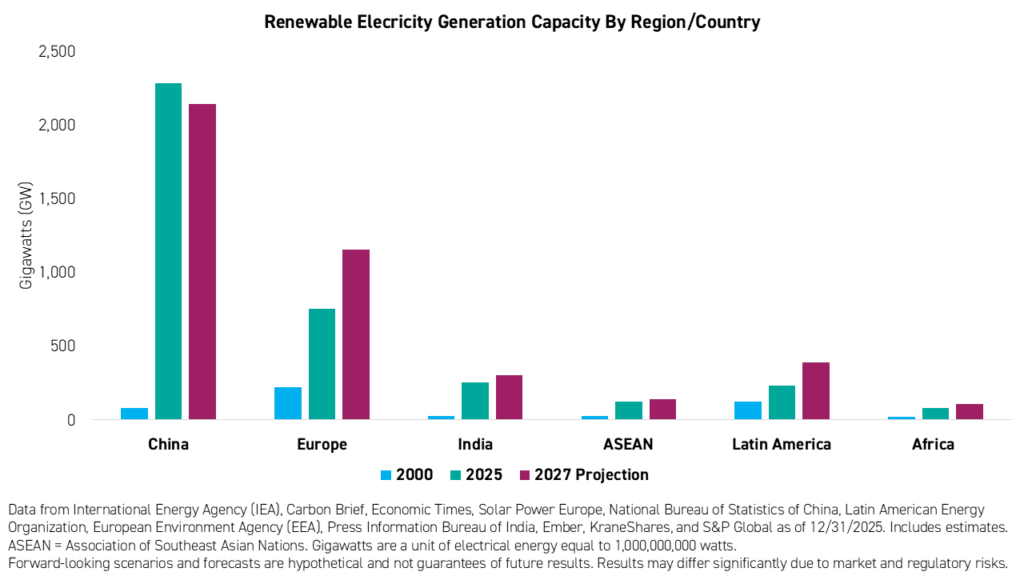
Despite being a leader in non-oil energy production, China is still not immune to the global price shock, as imported oil still supplies 14% of its energy needs.4 Just as the United States, which has become effectively energy independent, is still feeling the effect of higher gas prices. We believe this new reality could force both countries to further accelerate the search for alternative energy sources.
We believe the recent oil price shock could accelerate the transition to renewable and alternative sources of energy globally. China already leads in New Energy Vehicles (NEVs), Nuclear Energy, Solar & Wind Power, and Battery Storage.
The oil price shock could represent a significant opportunity for firms leading in each of these areas to meet potentially rising demand for energy transition globally. At the same time, these firms may also benefit from a potential acceleration in China's own energy transition because, despite being a global leader, it still has room to grow its renewable capacity.
NEVs
Car owners globally are discovering the global nature of oil prices which will likely affect future auto purchase decision making. Are you really going to buy another gas guzzler after paying $100 for a single tank of gas? Maybe not, if you have a good alternative.
While headlines have recently focused on China’s oversupply of NEVs and how far the country has come in terms of adoption, they miss an inconvenient truth: While 16.5 million of the 34 million new cars sold in 2025 were NEVs¹ in China, NEVs still only represent 12% of cars on the road.1
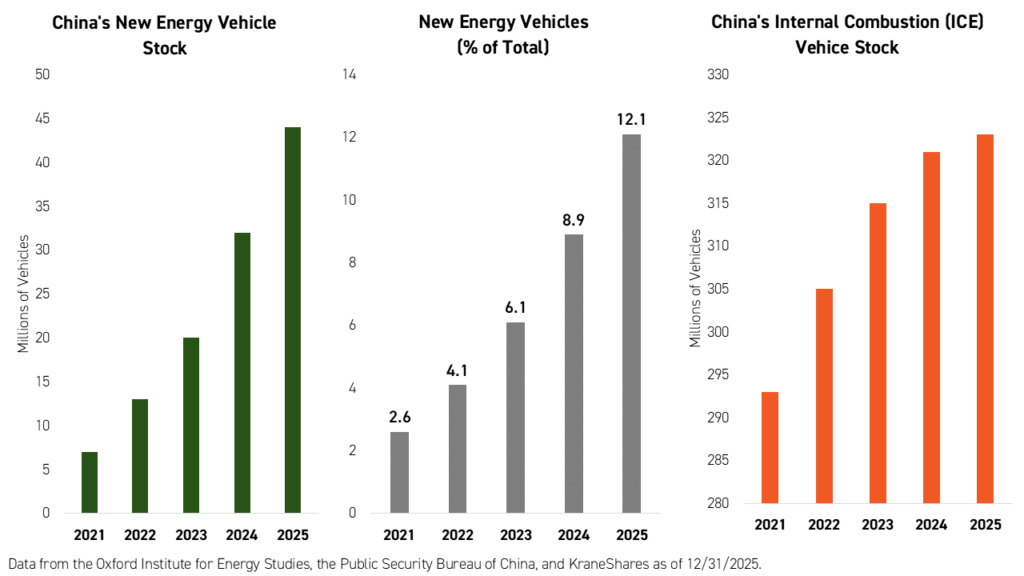
This is despite China accounting for one half of all electric vehicles in the world, as of the end of 2025, according to the chart below.
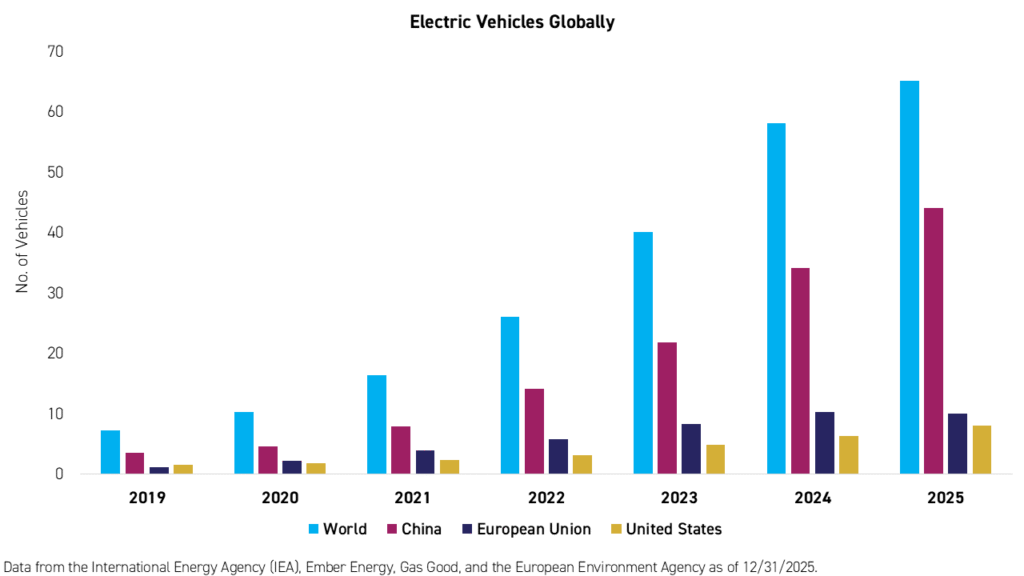
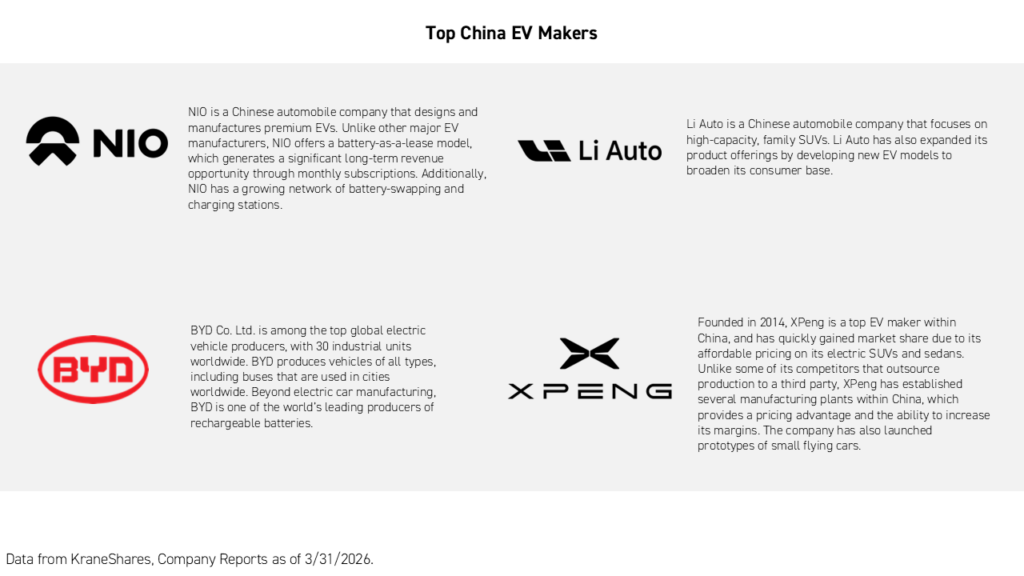
As such, we believe demand for China's NEVs could continue to accelerate, owing to both domestic and global needs and trends. China-based original equipment manufacturers (OEMs), such as BYD, NIO, Li Auto, and Xpeng, could be key beneficiaries.
Nuclear Power
Nuclear power only accounts for approximately 5% of China's electricity generation at present. However, due to the size of China's electricity market, this represents a considerable portion of the globe's nuclear energy capacity. Furthermore, China has been steadily adding new capacity as new plants are coming online. China currently has more nuclear energy plants under construction than any other country in the world.2
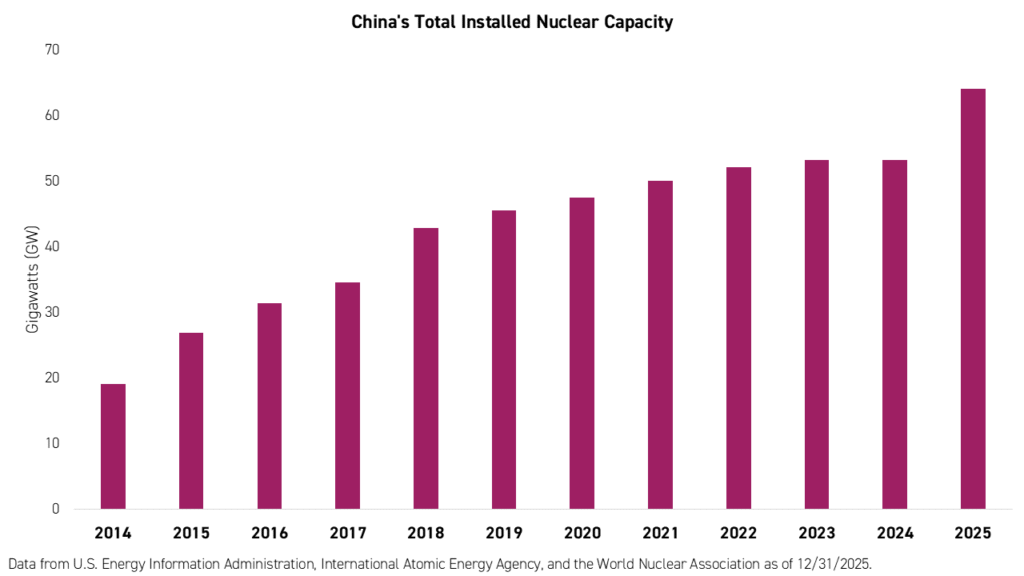
We believe the rise in China's nuclear power generation capacity has gone largely unnoticed by global investors.
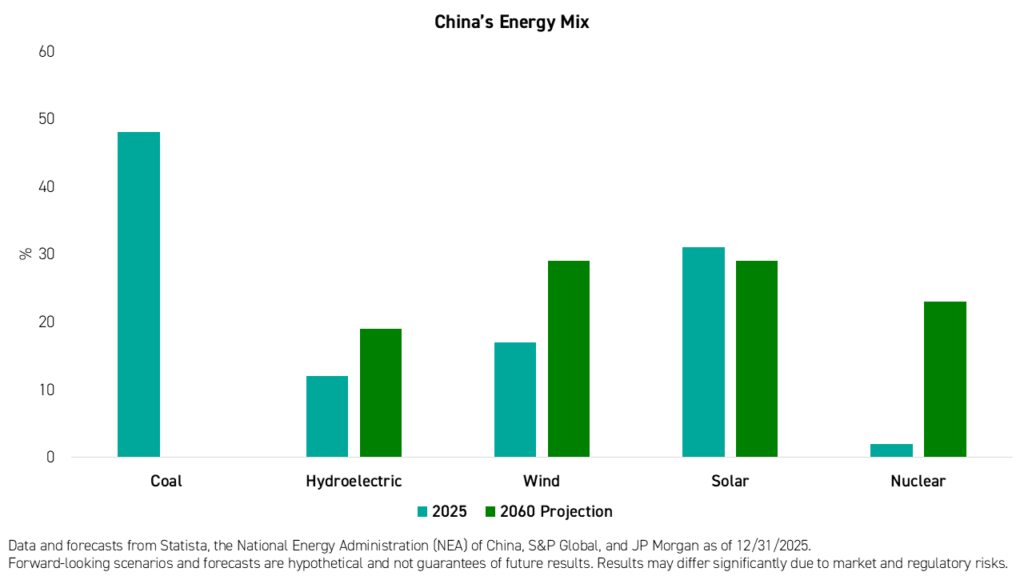
Taking this a step further, technology enhancements continue to evolve based on the lessons learned from the installation of dozens of new reactors. These enhancements and a demonstrated capacity to build new nuclear facilities at a rapid pace may indicate to the rest of the world that China is a quality partner when it comes to building nuclear power infrastructure.
In July, the Malaysian government launched a feasibility study into the development of nuclear energy within its borders.1 We believe there is a high likelihood that China-based firms will be called upon for support in the development of any eventual nuclear facilities.
Solar & Wind
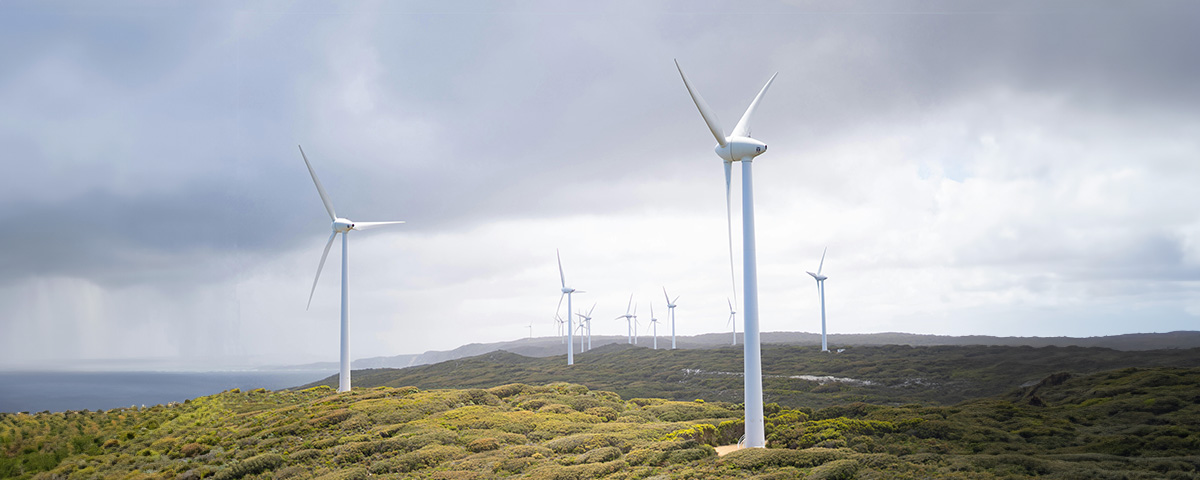
China has become a global leader in producing wind turbines and solar panels. It also propduces a significant amount of energy from these sources at home, mostly for use in the general electrical grid. Air passengers flying into Hong Kong can witness a massive offshore wind farm just east of the airport, a testament to China's capabilities in these fields.
In fact, China has become so good at generating these technologies that it created supply glut in 2025. This caused manufacturers to compete fiercely on price, cratering their margins. The situation became severe enough for the government to intervene, taking steps to address the situation, including encouraging industry participants to come together to stabilize supply dynamics.3
Fortunately, China's high inventories of solar and wind power system components, including turbines and panels, may be put to use sooner than expected thanks to the oil price shock earlier this year. Southeast Asian nations, many of which now constitute China's largest trading partners,3 may seek to bolster their alternative energy resources.
China Longyuan Power is a leader in China's solar power industry. It performs the design, development, construction, management and operation of wind farms. It also offers services to third-party wind farms, including consultation, repair, maintenance, and training. We believe Longyuan could increasingly be called on to build and service wind farms in Southeast Asia, potentially adding to its revenue and helping it offload excess supply.
Battery Technology
One issue with renewable energy is the simple reality that the sun doesn’t always shine, the wind doesn’t always blow, and even hydroelectrical energy generation can be impacted by droughts and the seasonality of rainfall. A critical and growing industry is evolving from EV and hybrid battery technology to industrial battery storage.
China's Contemporary Amperex Technology Limited (CATL) is the global leader in NEV battery storage technology that has evolved into further applications. Click here to view our article on CATL.
How To Invest
The KraneShares MSCI China Clean Technology Index ETF (Ticker: KGRN) provides access to key themes within China's renewable energy transition, including electric vehicles, wind power, solar power, hydropower, and nuclear power.
Conclusion
While the situation in the Middle East remains fluid, there is no question that countries, companies and individuals will look to insulate themselves from future oil shocks. For many, that could involve purchases from many of China's leading clean technology firms.
For KGRN top ten holdings, risks, and other Fund information, please click here.
Citation:
- "Malaysia launches nuclear energy feasibility study," World Nuclear News. August 25, 2025.
- Data from Statista as of 2/28/2026.
- Meredith, Sam. "China calls for 'concerted' effort to tackle excess solar capacity," CNBC. April 20, 2026.
- American Energy Alliance, Statistical Review of World Energy as of 12/31/2025.