Trump-Xi Summit: A Watershed Moment For US-China Relations?
By  Henry Greene
We believe President Trump's visit to China was an important moment for US-China relations. The US-China relationship has been under pressure for years, ever since the COVID-19 pandemic. The visit was symbolic of both nations' ultimate desire to pursue stability in their relations.
During the Summit, China’s President Xi stated that "China and the United States both stand to gain from cooperation and lose from confrontation. We should be partners, not rivals. We should help each other succeed and prosper together".
However, markets were not fully satisfied with the outcomes of the visit. Investors had high hopes that such an event could have led the US to scrap tariffs on certain goods or even to the full reopening of the Strait of Hormuz. Neither came to pass.
While hopes were dashed for these specific geopolitical wins, we believe markets are underestimating the value of the softer “wins” that emerged from the summit:
The US business community has said, loud and clear, that they want stability in US policy toward China, and Trump is listening. The US delegation had at least twelve corporate executives, including Tesla's Elon Musk, Apple's Tim Cook, Nvidia's Jensen Huang, and Boeing's Kelly Ortberg. These business leaders were also hosted by Premier Li for a private briefing.
China’s internet platforms may benefit from the reversal of Biden-era restrictions on technology trade. The US officially lifted export controls on Nvidia H200 chips and approved their sale to ten companies, including Alibaba and Tencent.1 This is important for both internet companies, which are constantly seeking to diversify their chip supply. They currently rely heavily on in-house and domestic suppliers. Having Nvidia as a potential additional supplier, even if they cannot access its highest-end chips, could increase their flexibility in chip purchases.
Both sides are committed to further dialogue. Both governments discussed the creation of boards of trade and investment. President Xi will visit the White House in September, potentially followed by another potential meeting between the two leaders at the G20 in Shenzhen.
Media Misalignment
We noted the significant disparity between US media coverage of the meeting and Mainland China media coverage of the meeting, which was more in line with the official statements that came out of the White House, seen below.

The China Daily also published a celebratory article regarding the meeting, including a graphic detailing key metrics for the relationship.

Meanwhile, Western reporters indicated some skepticism after the summit concluded in Beijing.

What Does This Mean For Investors?
We believe we can expect greater clarity on the trajectory of US-China relations in the coming years, which should help investors gain more confidence in their decision-making regarding China and other emerging markets. However, it will take time for either nation to take concrete steps.
In the first four months of 2026, onshore China experienced a bull market, while offshore China lagged.2 We believe this is primarily due to offshore China, i.e., equities listed in Hong Kong and New York, being mostly owned by foreign investors versus onshore China, which is mostly owned by domestic investors in China. The Trump-Xi summit and improving US-China relations, in theory, should help offshore China catch up with onshore.
This dispersion can be clearly seen through the lens of what we believe are the most attractive sectors within China, namely, the internet and technology innovation industries. Comparing the year-to-date (YTD) performance of the KraneShares SSE STAR Market 50 Index (Ticker: KSTR), representing onshore China technology, and the KraneShares CSI China Internet ETF (Ticker: KWEB), paints a stark picture.

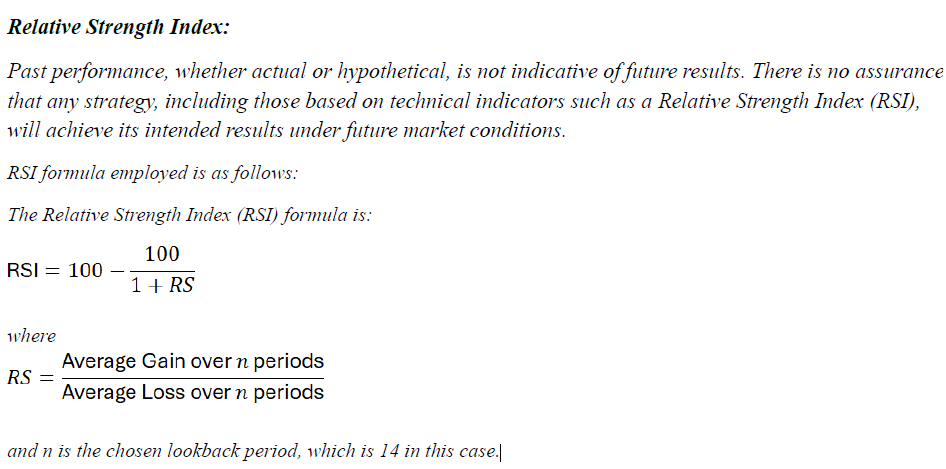
After a short-lived initial surge, KWEB is back to its pre-summit level. We believe this could represent an attractive entry point for long-term investors. Bolstering our case, KWEB’s relative strength index (RSI) is back to its level from March.

Conclusion
We believe the Trump-Xi Summit delivered more than what met investors’ eyes initially and its positive impacts will continue to be felt for years to come. Key takeaways include Trump standing with the US business community to seek more stable relations, internet platforms potentially benefiting from a loosening of technology trade restrictions, and a commitment to further dialogue and to building bilateral institutions. The investment implication could be improved sentiment in the offshore market, which we believe is best captured through KWEB.
The Relative Strength Index (RSI) is a widely used technical momentum indicator that measures the magnitude and velocity of recent price changes to evaluate overvalued or undervalued conditions in an asset's price. It appears as an oscillator line on a scale of 0 to 100. An RSI reading above 70 suggests an asset has risen too rapidly and may be overvalued. This can signal an impending pullback or trend reversal to the downside. An RSI reading below 30 indicates an asset has fallen sharply and may be undervalued. This can signal a potential upward reversal or a price rebound.
For KWEB standard performance, risks, and top 10 holdings, please click here.
For KSTR standard performance, risks, and top 10 holdings, please click here.
Citations:
- "Exclusive: US clears H200 chip sales to 10 China firms as Nvidia CEO looks for breakthrough," Reuters. May 14, 2026.
- Data from Bloomberg as of 4/30/2026.